

One showcase, in store and online
We formed the company, created the brand, keep the books and built the system that ties together the counter, the workshop and the online store of a gold jeweler in Nashville, Tennessee.


- Client
- Ferchez Jewelry
- Business type
- 18k gold jeweler
- Service area
- Branding
- Location
- Nashville, Tennessee
Services delivered
- Company Formation
- Sales Tax Registration
- Accounting
- Brand Design
- Identity Manual
- Web Design
- Online Store
- Management System
- Hosting & Deployment
The challenge
FERCHEZ was about to open an 18k gold jewelry store in Nashville. And a jeweler is not just any shop: many pieces are one of a kind, each one is worth a lot of money, and the ones that come in for repair aren't even theirs. On top of that it wanted to sell online, which is exactly where a business like this breaks: two inventories that stop matching, and the one-of-a-kind piece someone orders on the website after it already walked out the door that morning.
What we did
First the company: we formed it, registered it to collect Tennessee sales tax and have kept its books from the start. Then the brand: a monogram with a diamond, on black and ivory, and a single gold that isn't handed out, so it keeps meaning luxury rather than decoration. And finally the system that holds the business up. One inventory for the showcase and the website; a workshop where the customer's piece never counts as merchandise; a cash drawer whose balance isn't typed in but added up; and Tennessee sales tax, which isn't a flat rate, worked out properly on every invoice.
The result
The one-of-a-kind piece sold at the counter in the morning shows as sold out on the website before anyone remembers to take it down. The ring a customer leaves to be soldered can't be sold by mistake on a busy Saturday, and if one day she says “that dent wasn't there”, there is a photo of how it came in. And what costs a jeweler dearly no longer slips through: when a cash sale goes over $10,000, the panel warns that there are fifteen days to file Form 8300, and the warning lands with the same team that keeps the books.
The brand
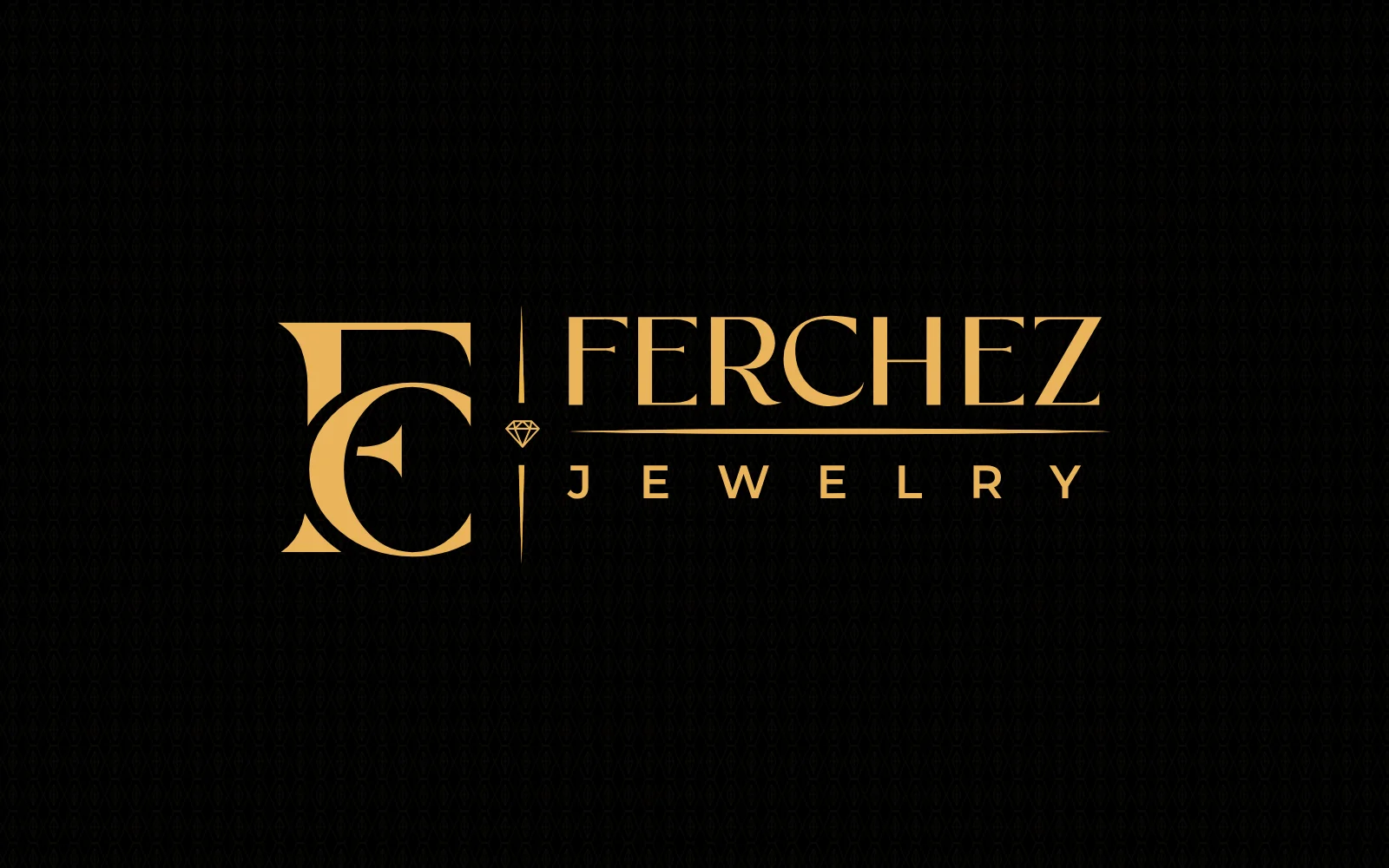
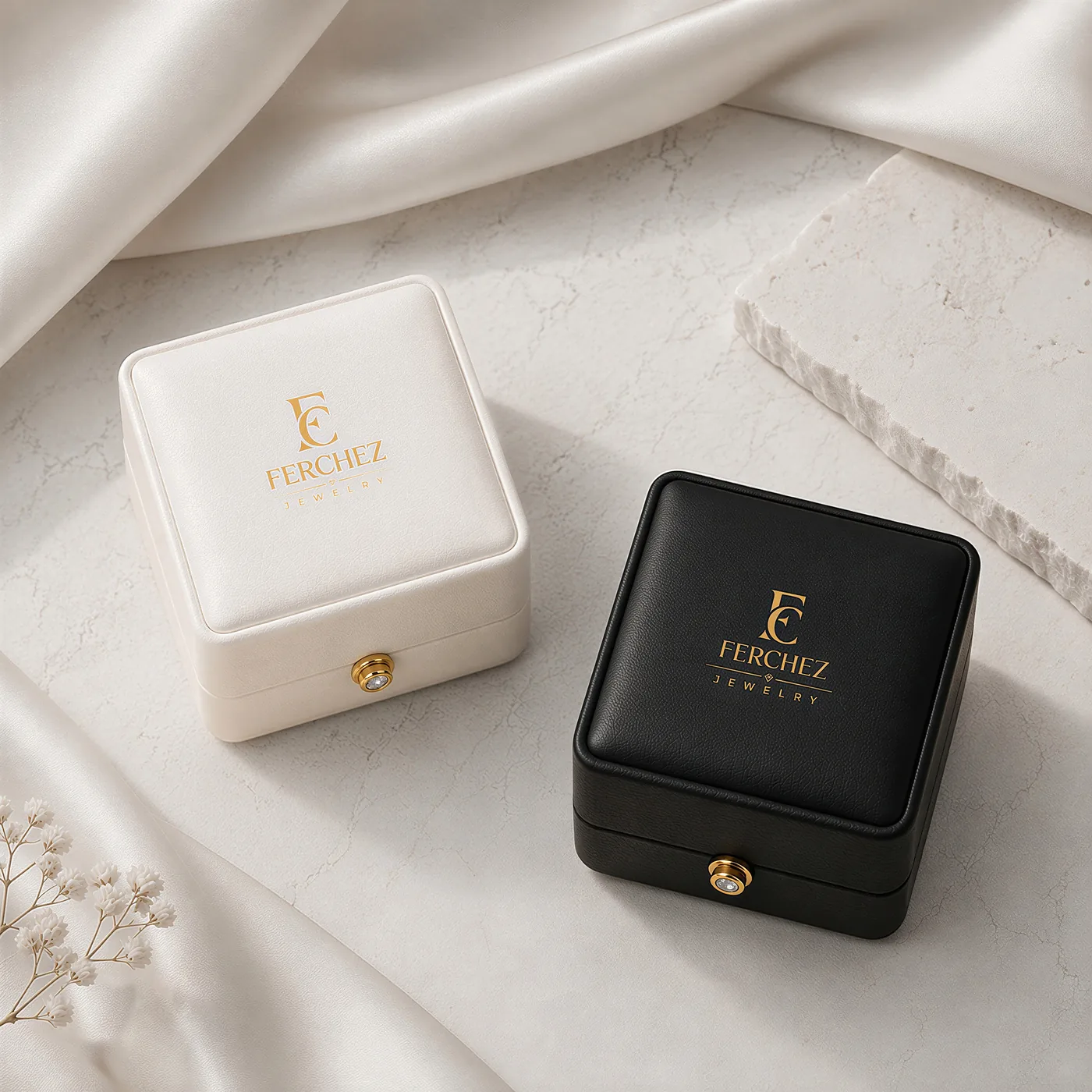
A monogram and a diamond
The F and the C cross into a monogram, and a small diamond says what the house does before you read “Jewelry”. Gold on black, which is the version that leads.
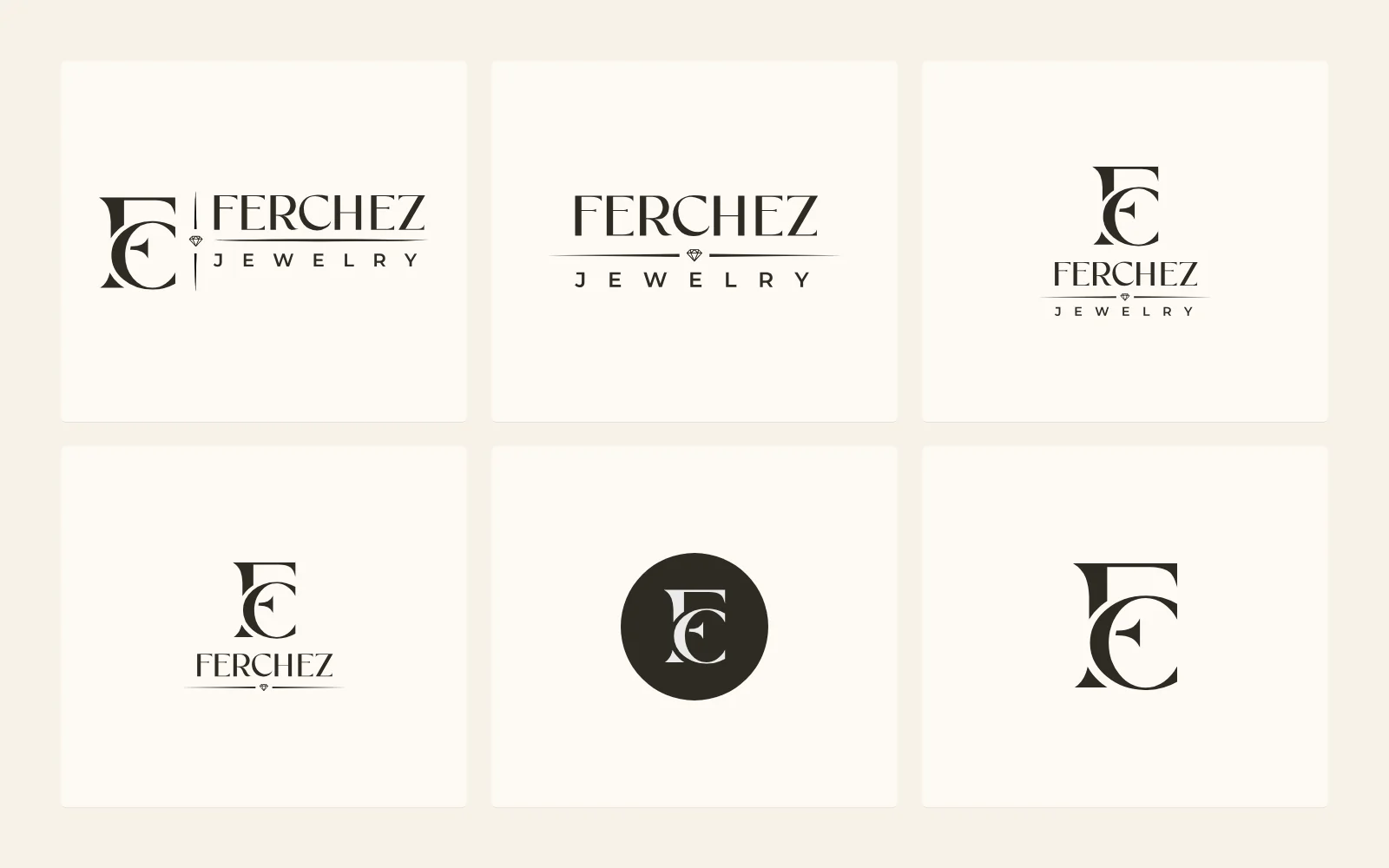
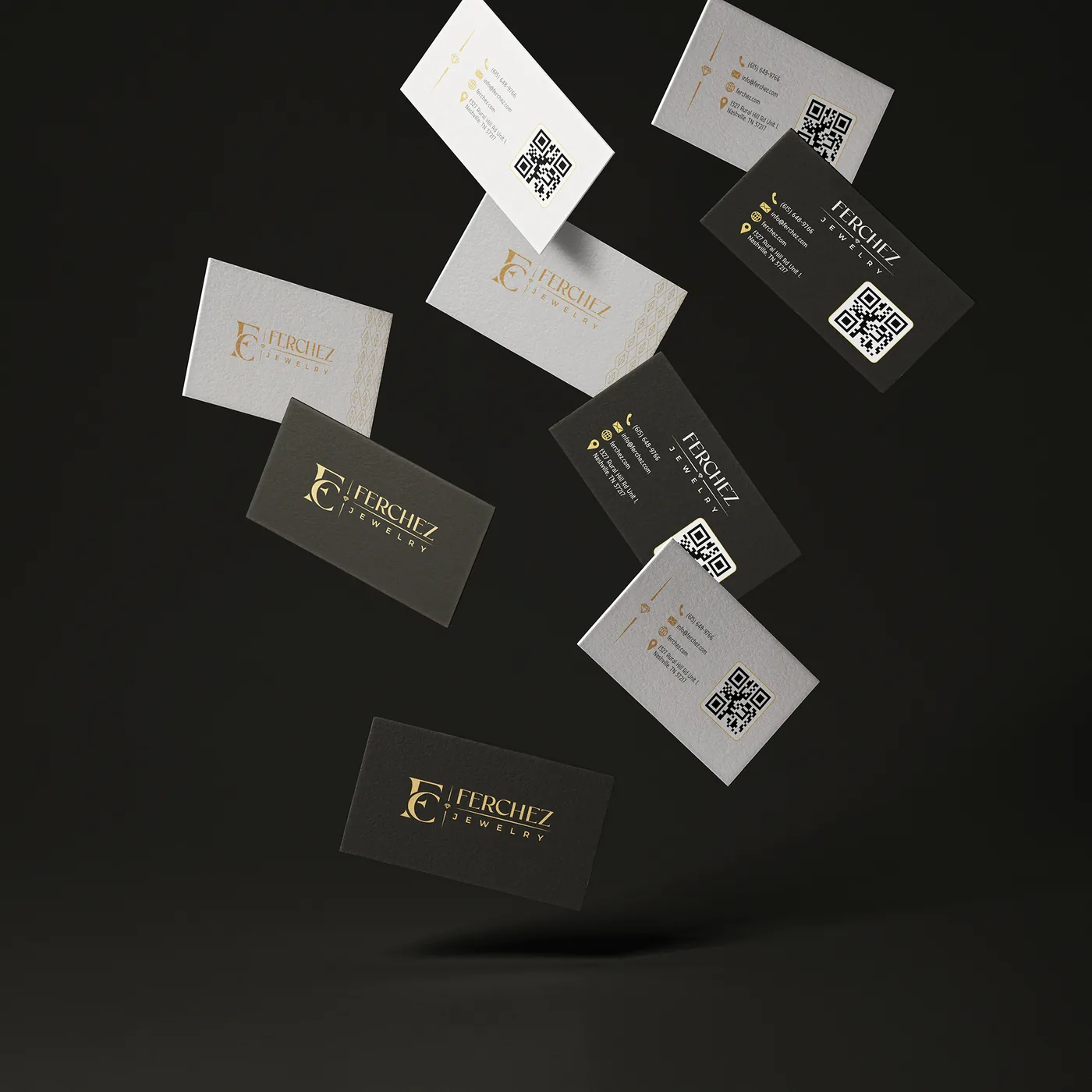
A version for every size
From the header lockup to the bare monogram in the browser tab, every space has its piece. Below 200 pixels wide the logo doesn't shrink: it switches version, which is what keeps it legible.
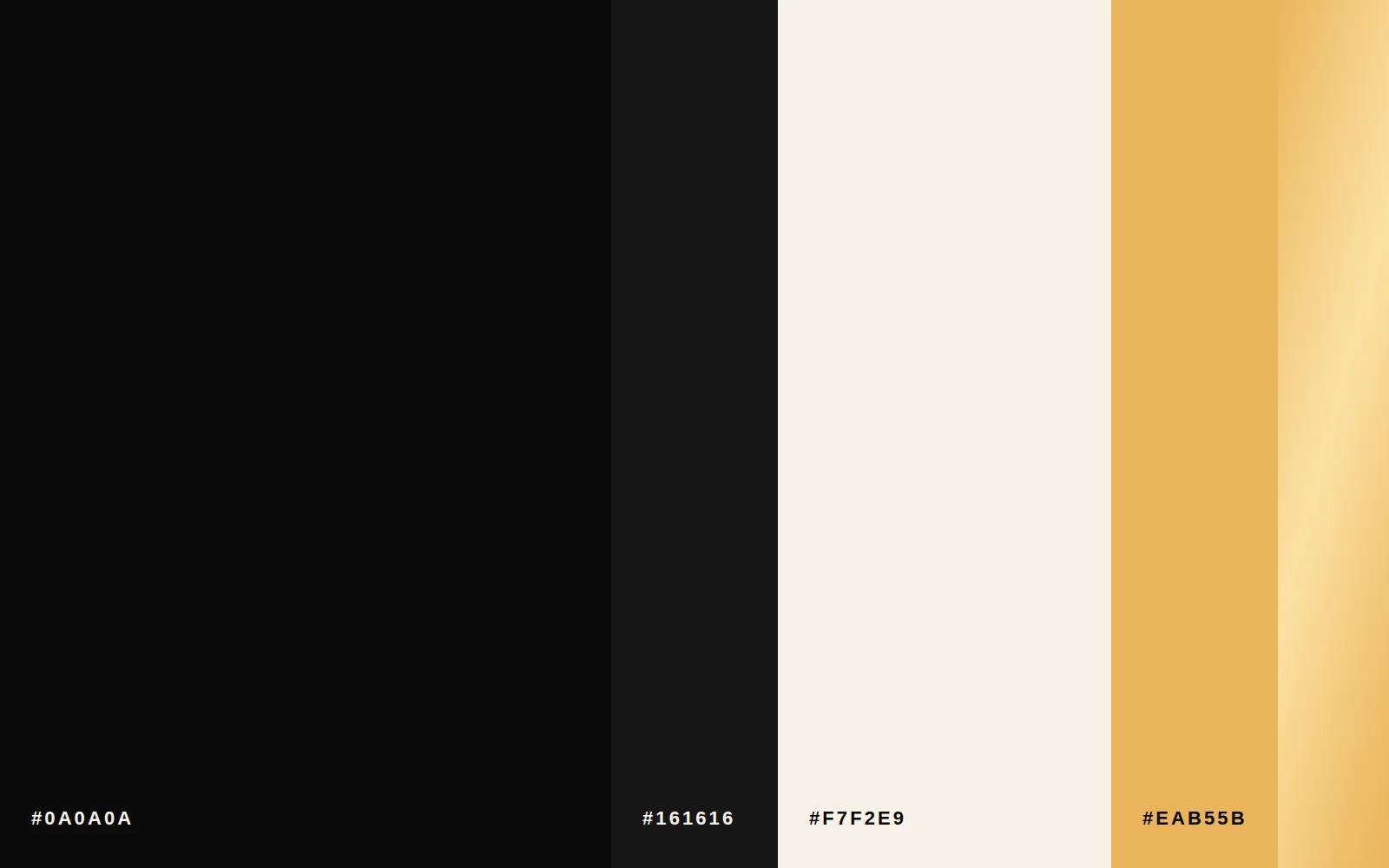
A single gold, and it isn't handed out
Black and ivory take the surfaces, and the gold —exactly the one in the logo— stays at a fifth of what you see. A sapphire, a wine and a champagne were tried as a second color, and none of them stayed.
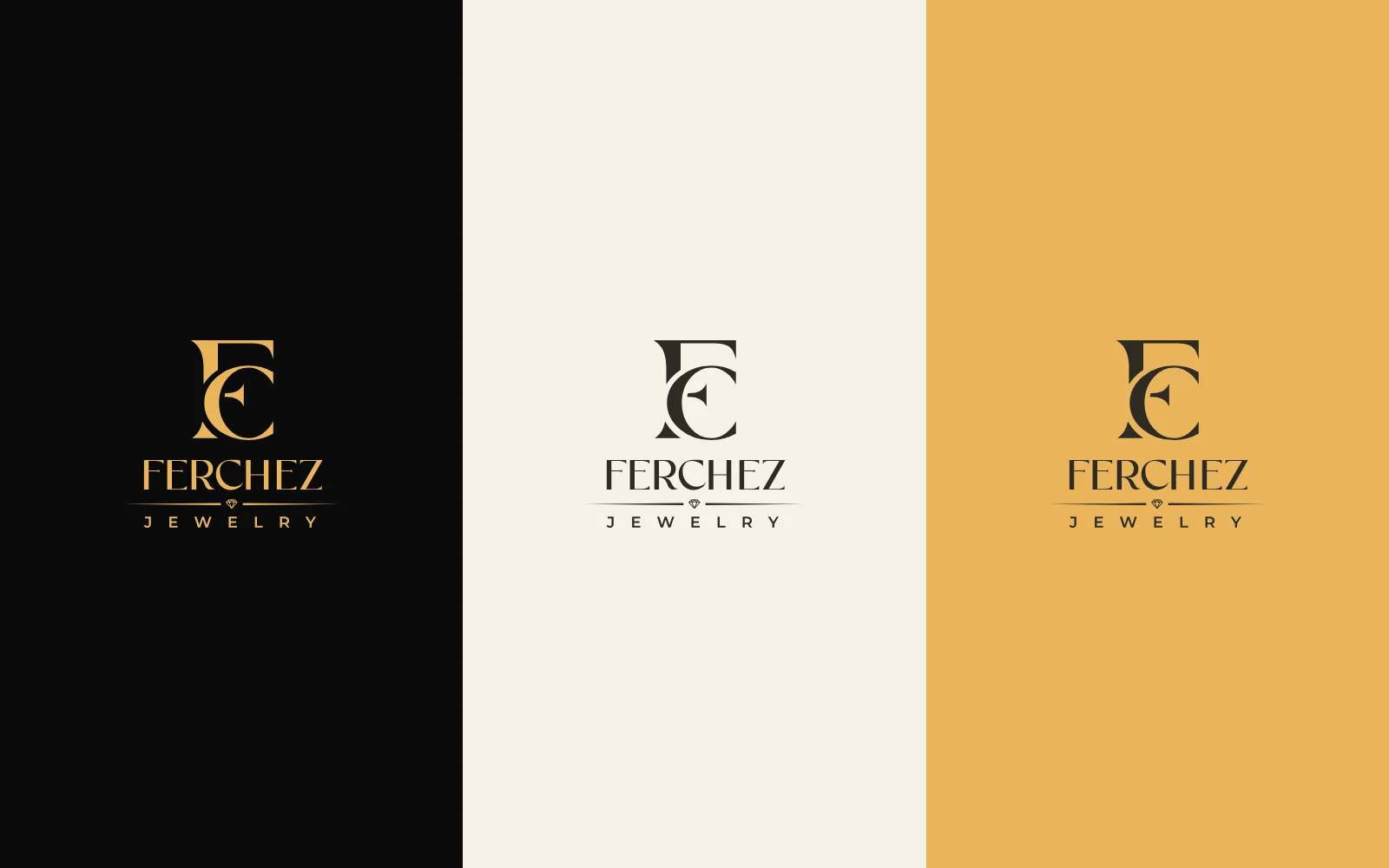
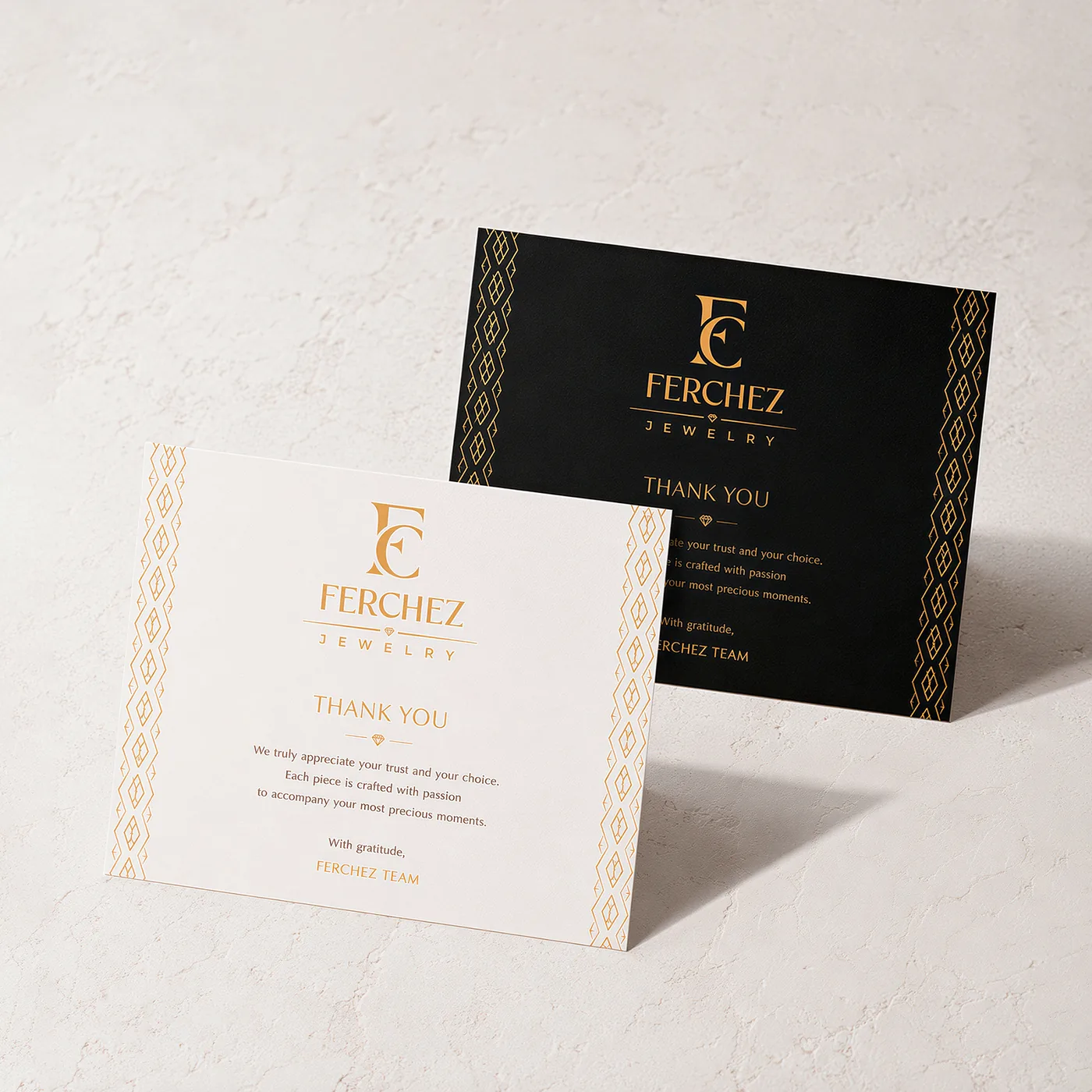
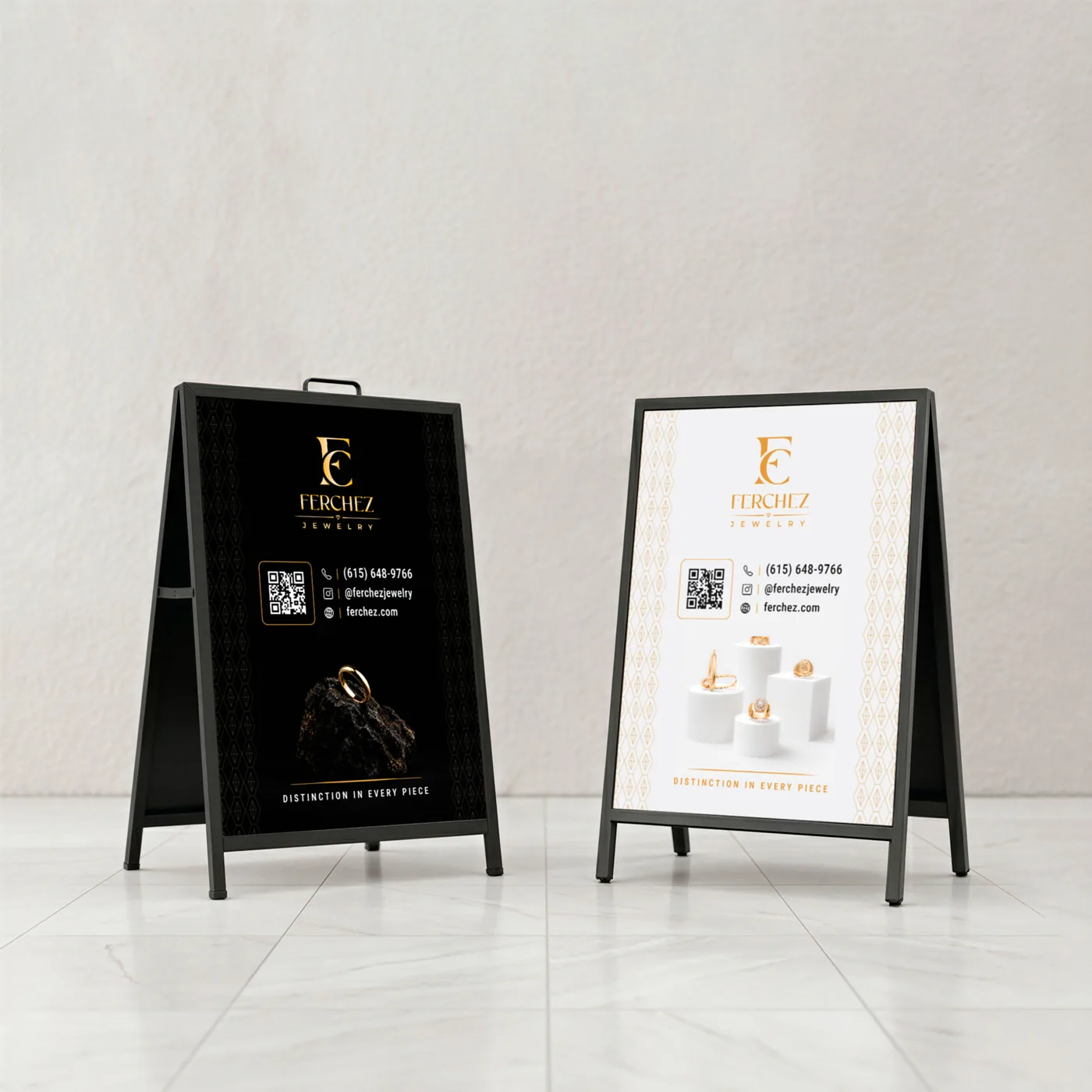
Every background has its version
On black, gold; on ivory or on the gold itself, black. And on the website gold is never used as text on a light background: there it stays at a 1.55 contrast and can't be read.

Backgrounds drawn from the diamond
The patterns repeat the same diamond as the logo, in gold, in black or as a lattice. They always sit behind and give texture without adding a single color to the palette.
The project in pictures



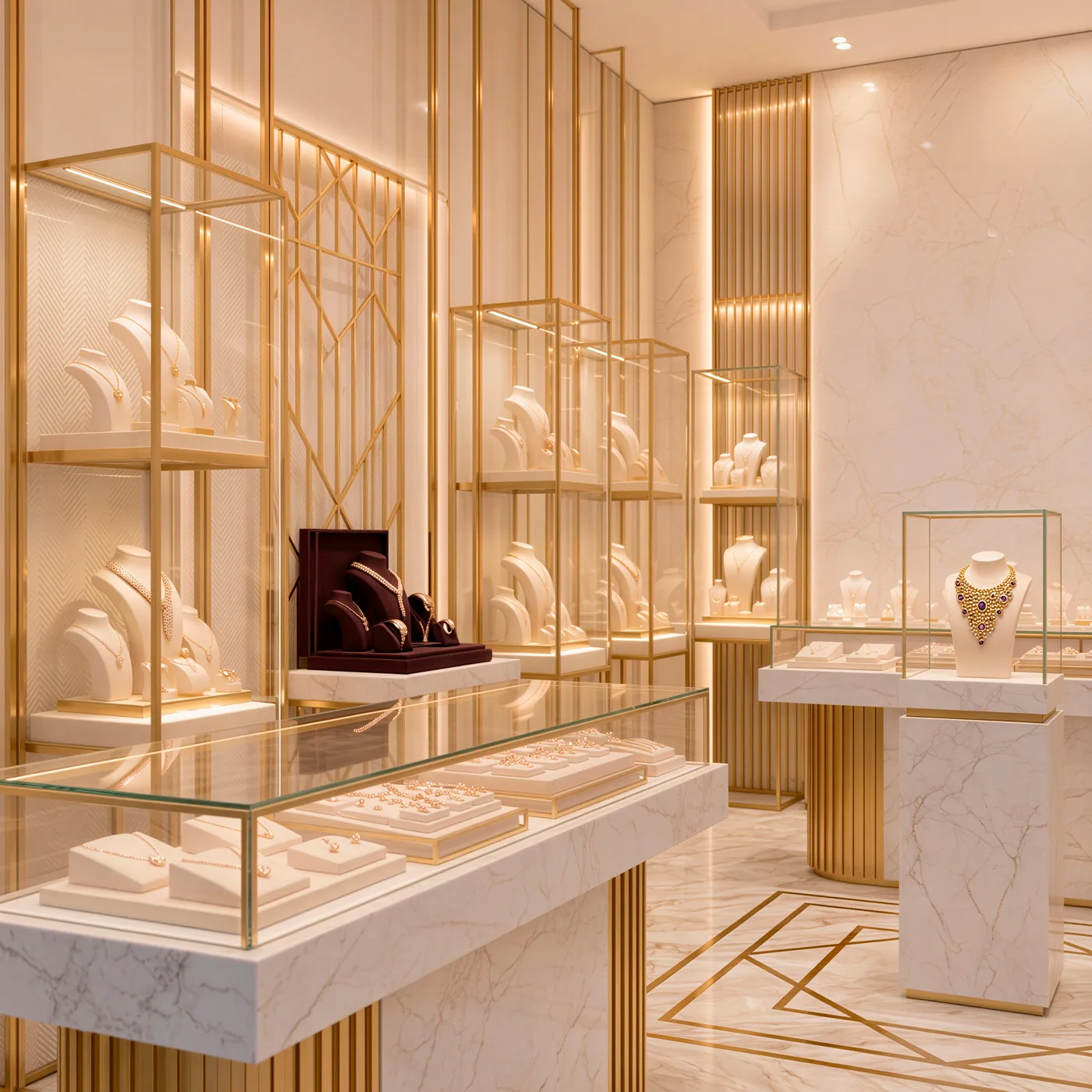


The system that runs the store
The screenshots carry demonstration data: made-up customers, pieces and sales to show the system at work.
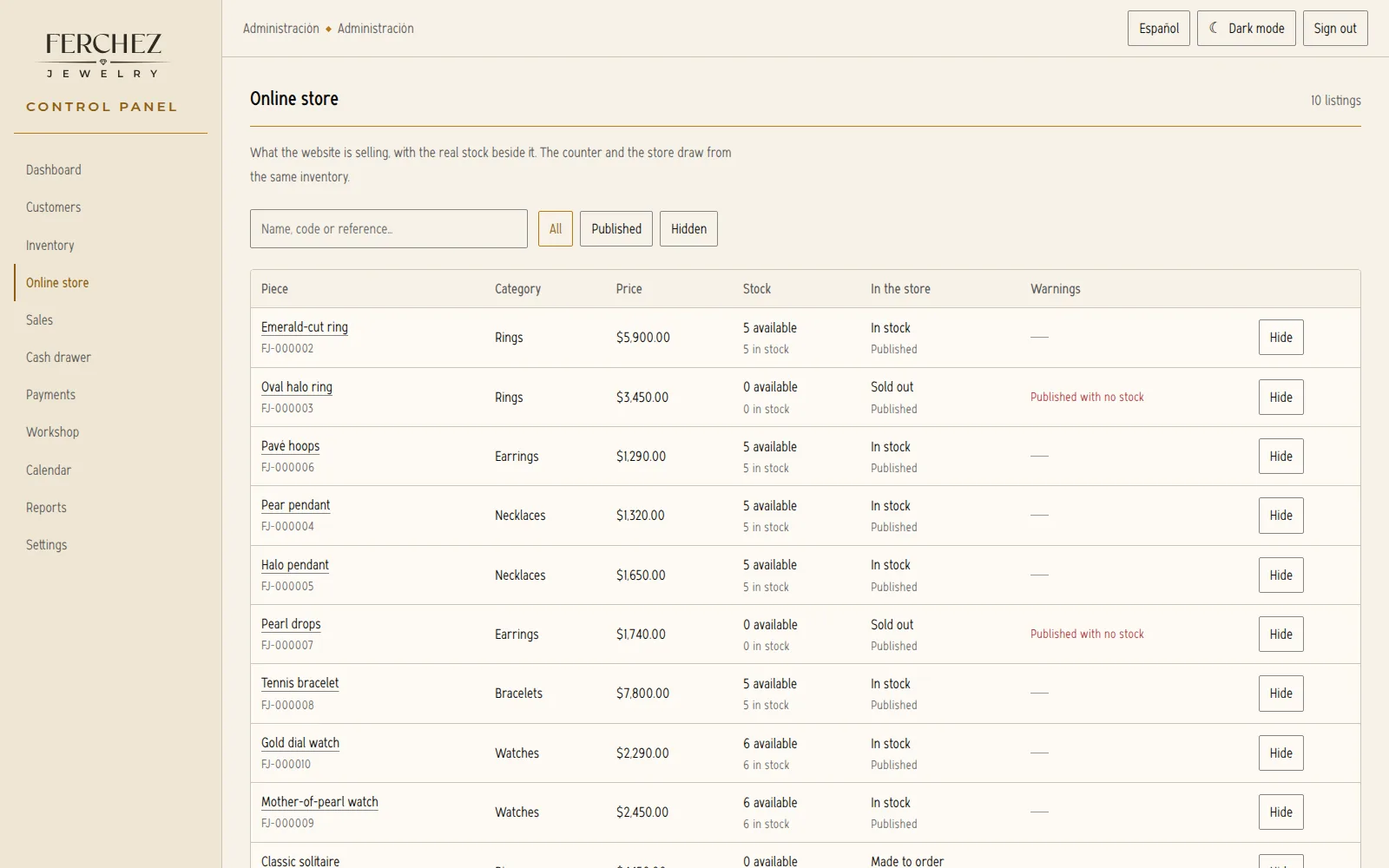
Sold in the showcase, sold out online
The online store works out availability from the same stock the counter moves, so a one-of-a-kind piece sold in the morning shows as sold out online minutes later. And outside it only says whether it can be bought: not the tag reference, nor how many are left inside.
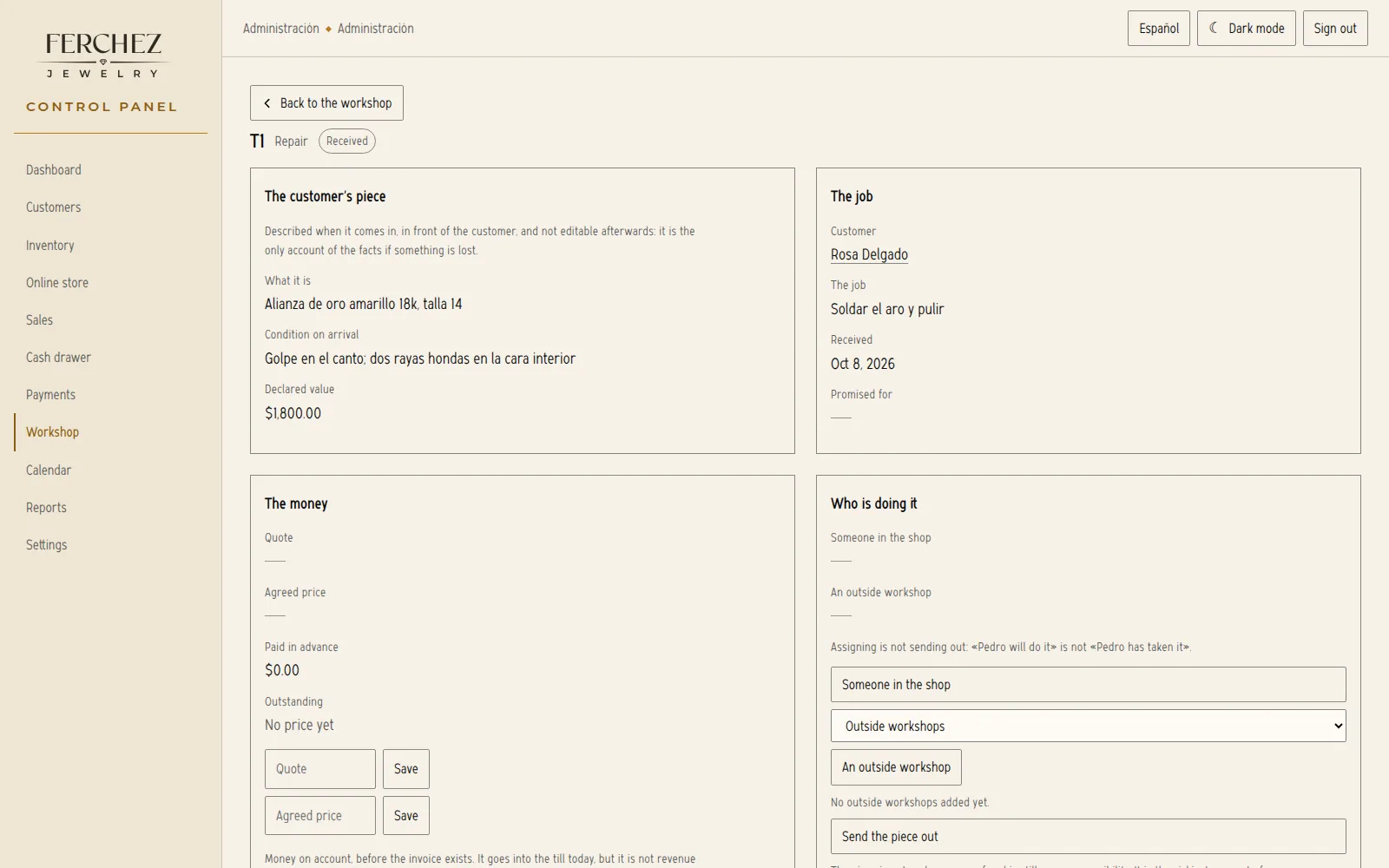
The customer's piece is never merchandise
What comes in for repair is described in front of the customer —what it is, how it arrives and what they say it's worth— and that can't be rewritten afterwards. It doesn't show up in the counter's search, so there's no way to sell it by mistake.
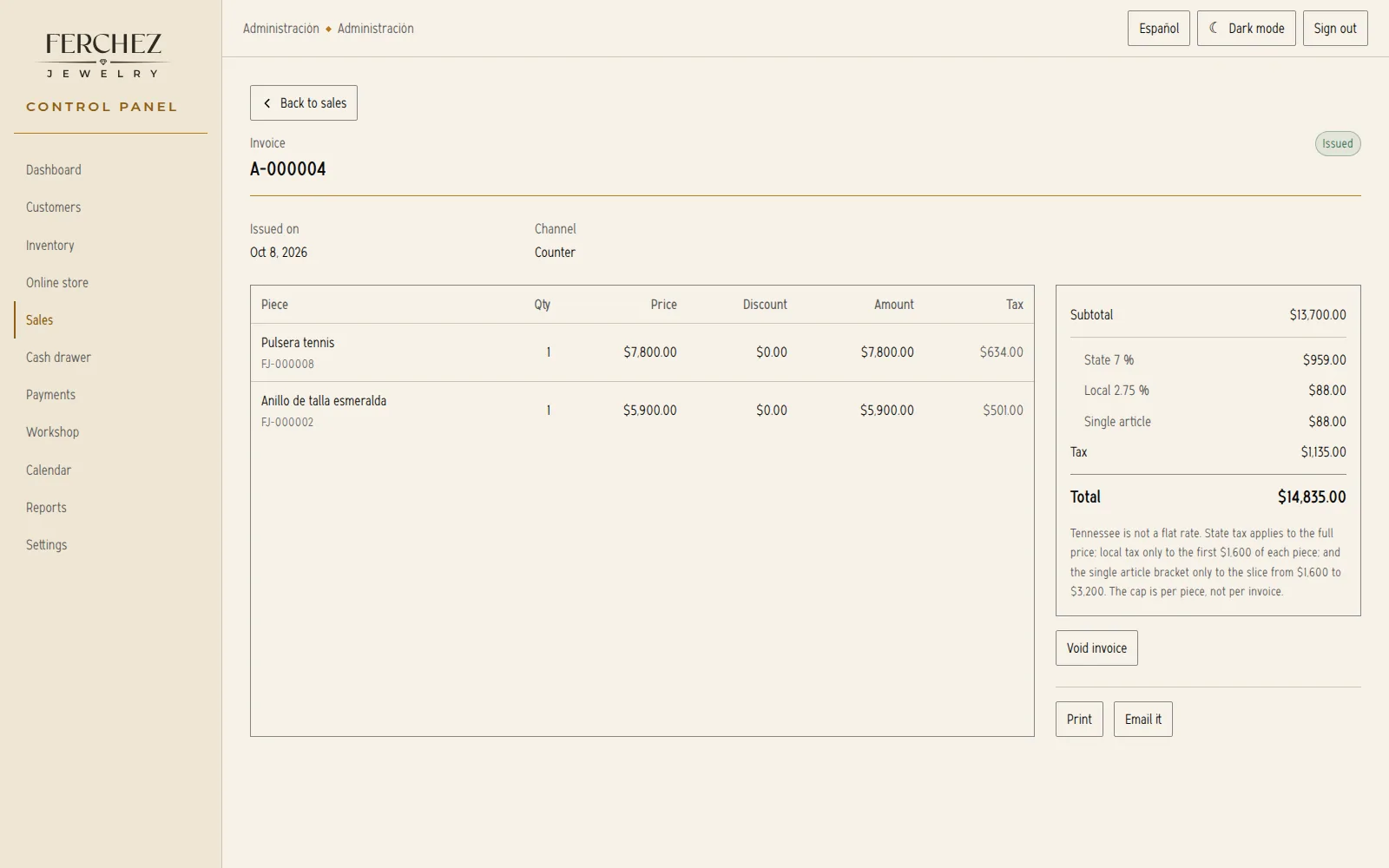
Tennessee sales tax, done right
In Tennessee sales tax isn't a flat rate: the local part only applies to the first $1,600 of each piece, and there's a bracket of its own up to $3,200. Every invoice works it out and explains it, so the customer understands what they're paying.
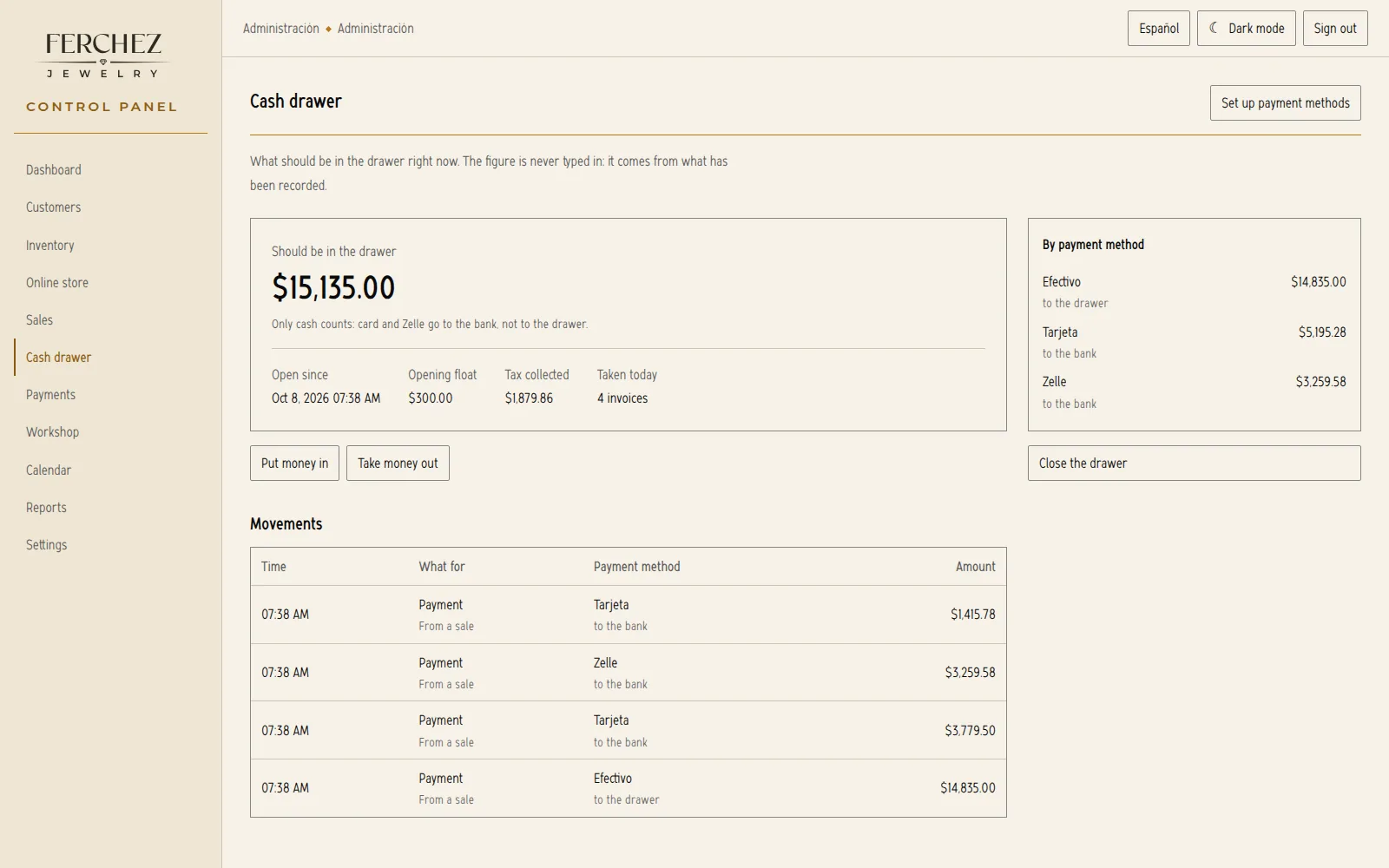
A cash drawer that can't be dressed up
What should be in the drawer isn't typed in: it's added up from what was collected, and only cash counts, because card and Zelle go to the bank. At closing, what's counted is checked against that figure.
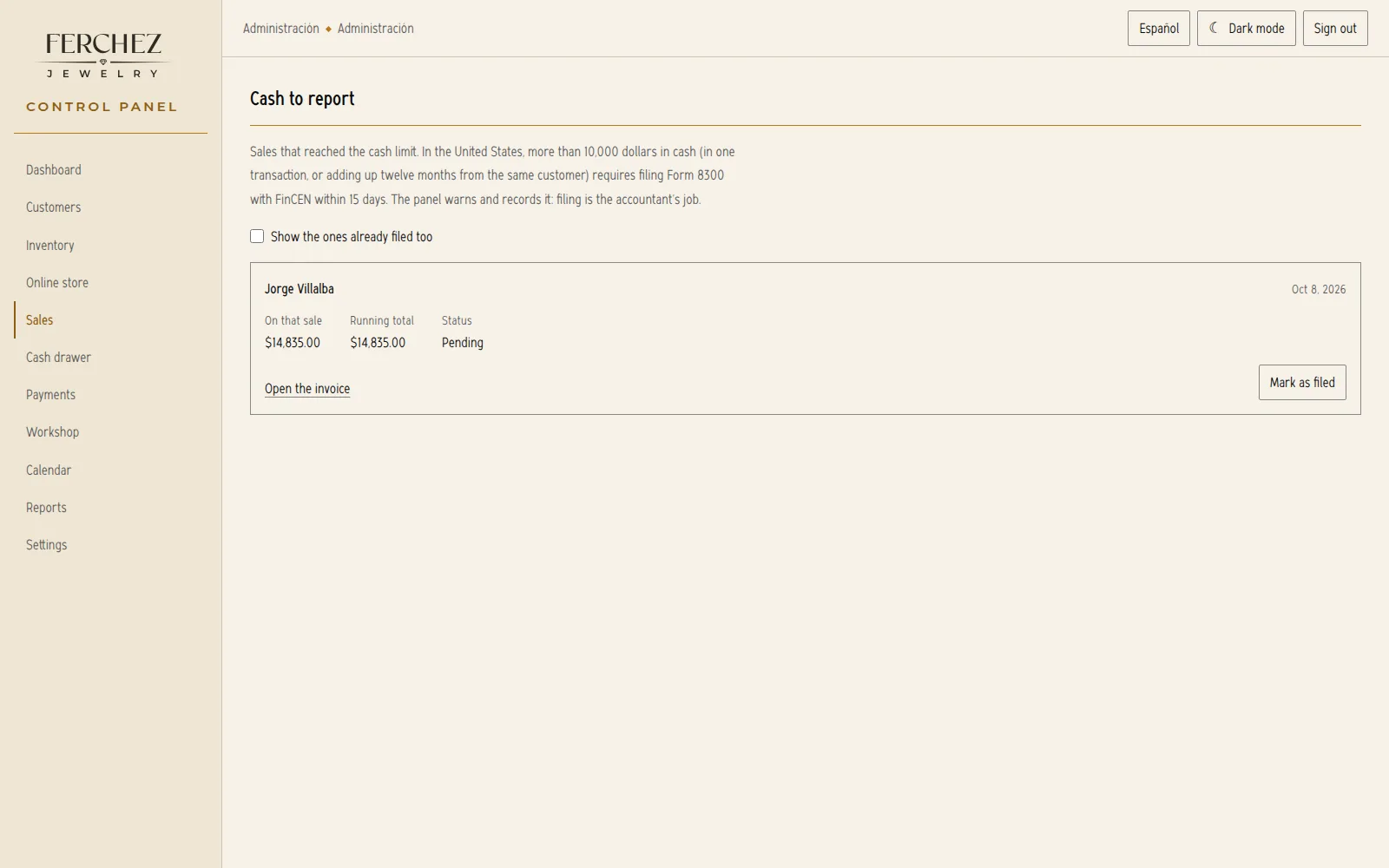
The warning that saves a fine
A jeweler that takes more than $10,000 in cash has fifteen days to file Form 8300, and the panel spots it in the sale itself. It doesn't block the sale, because the law asks for it to be reported, not refused: it stays pending until someone marks it as filed.
The online store
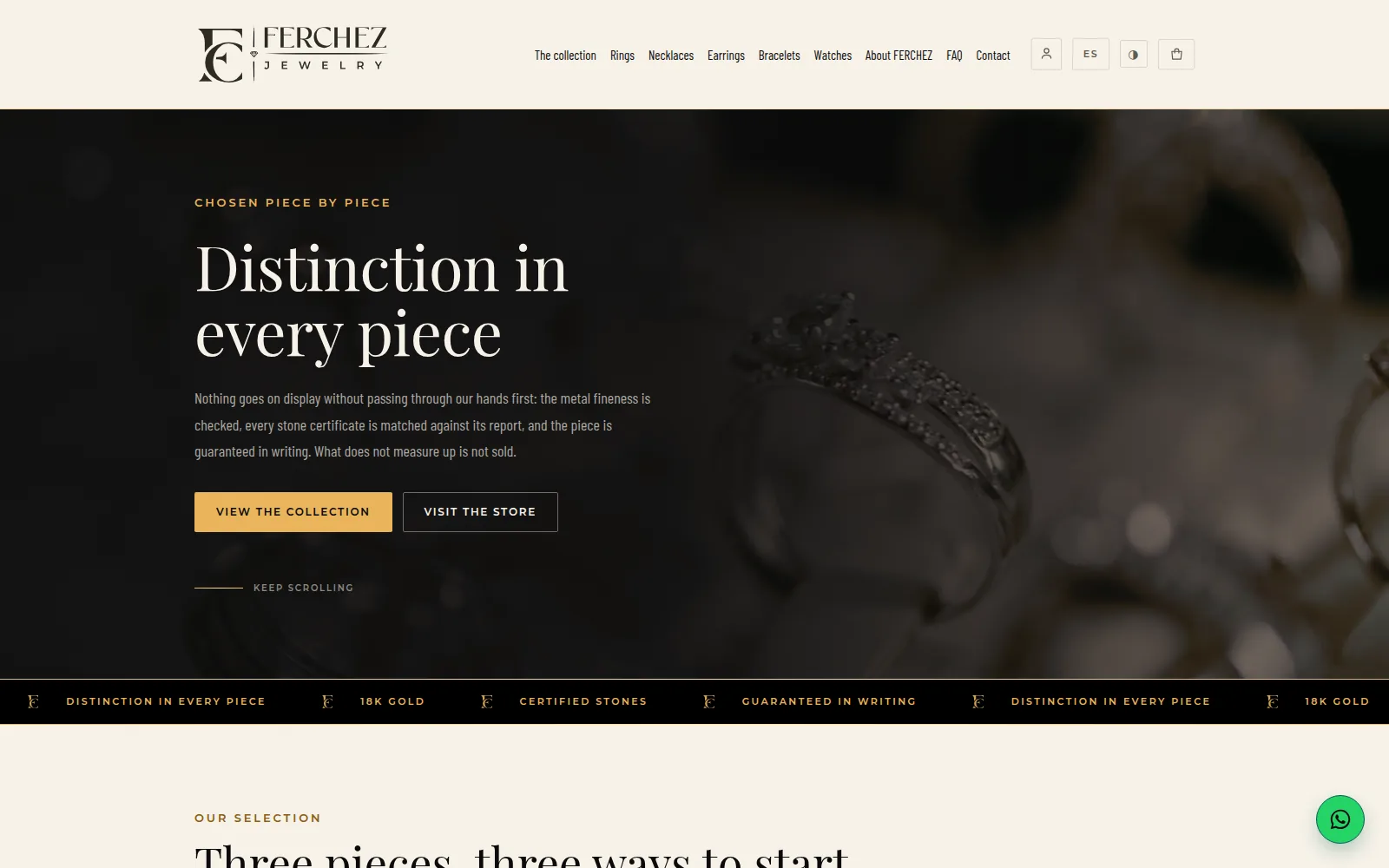
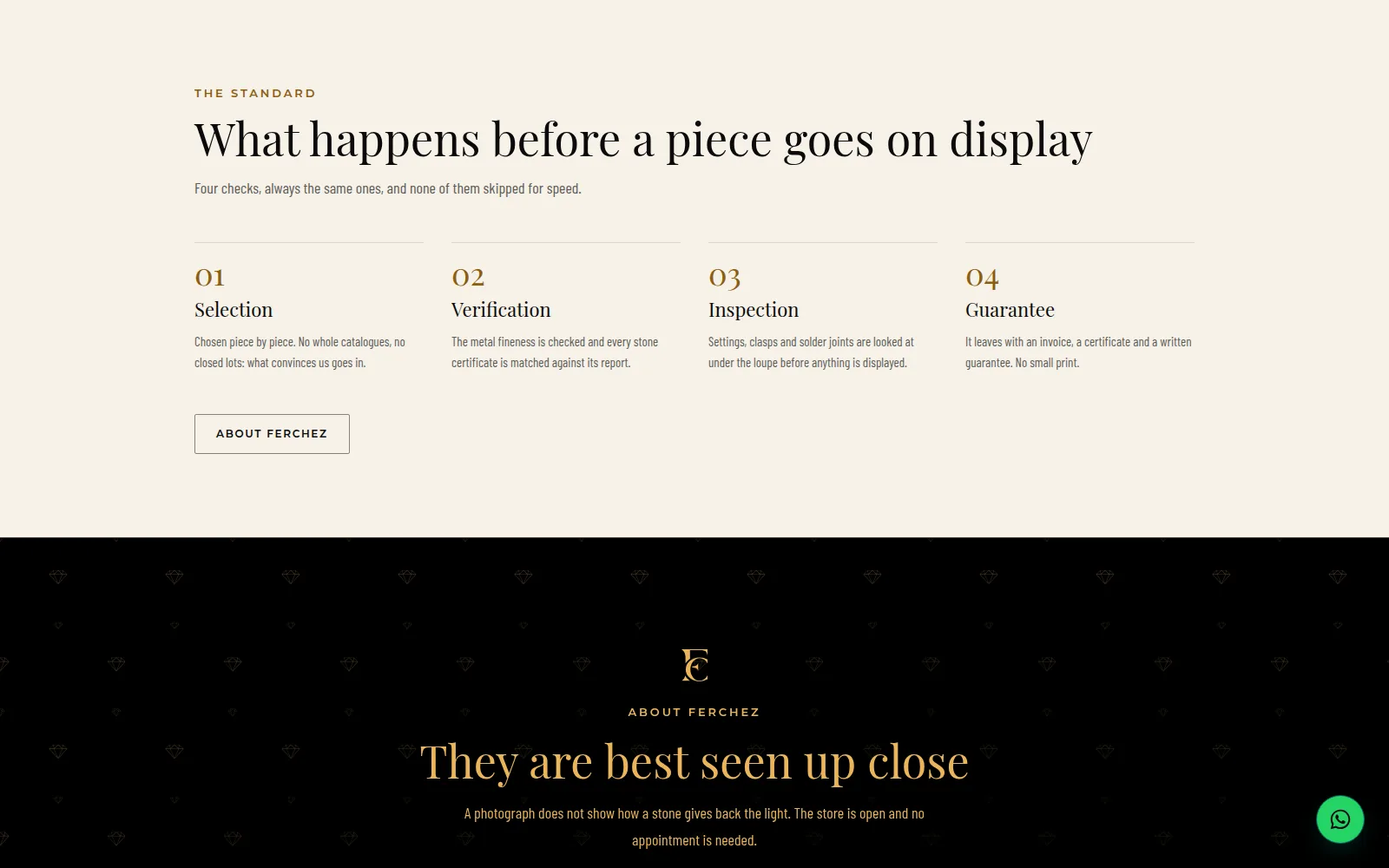
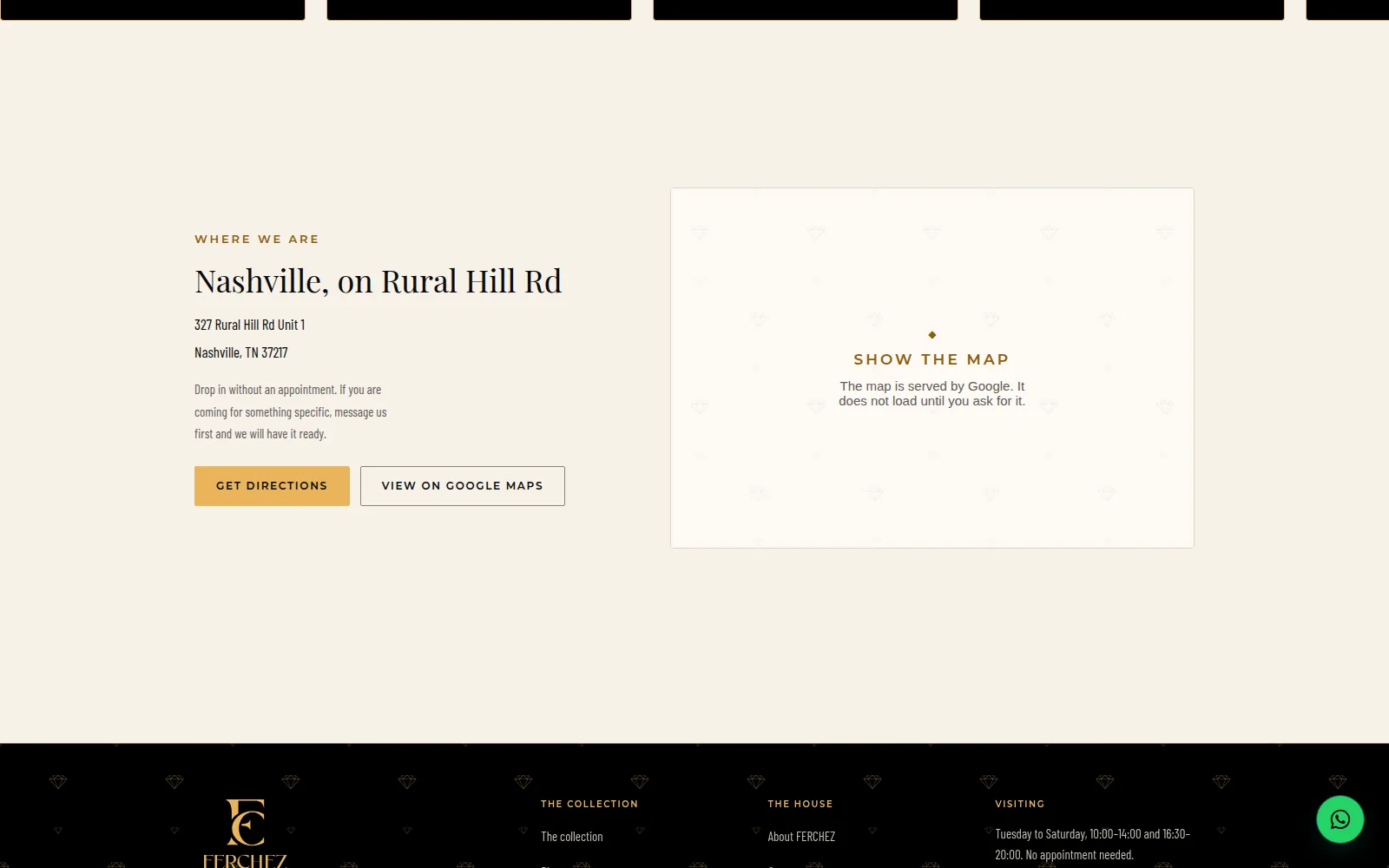
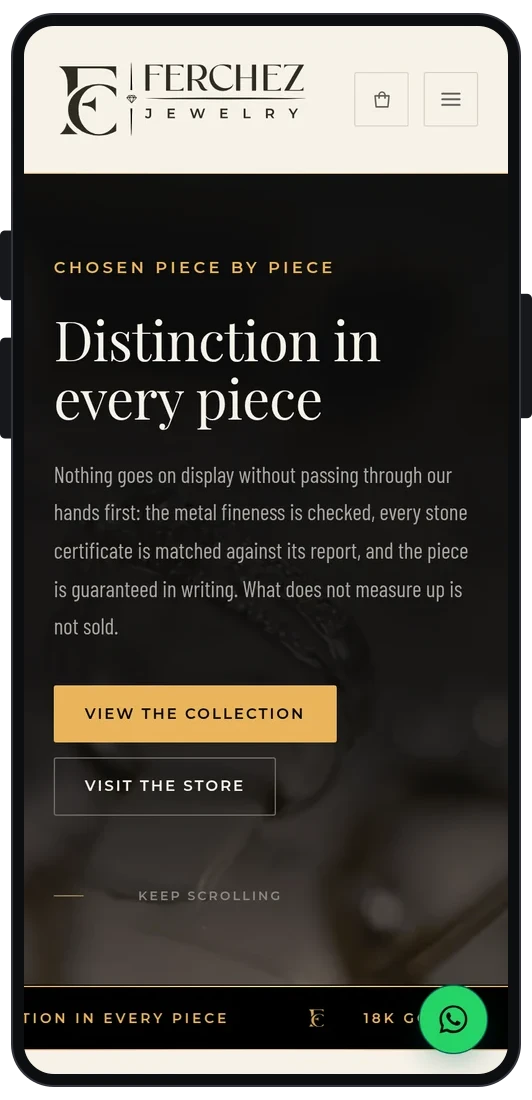
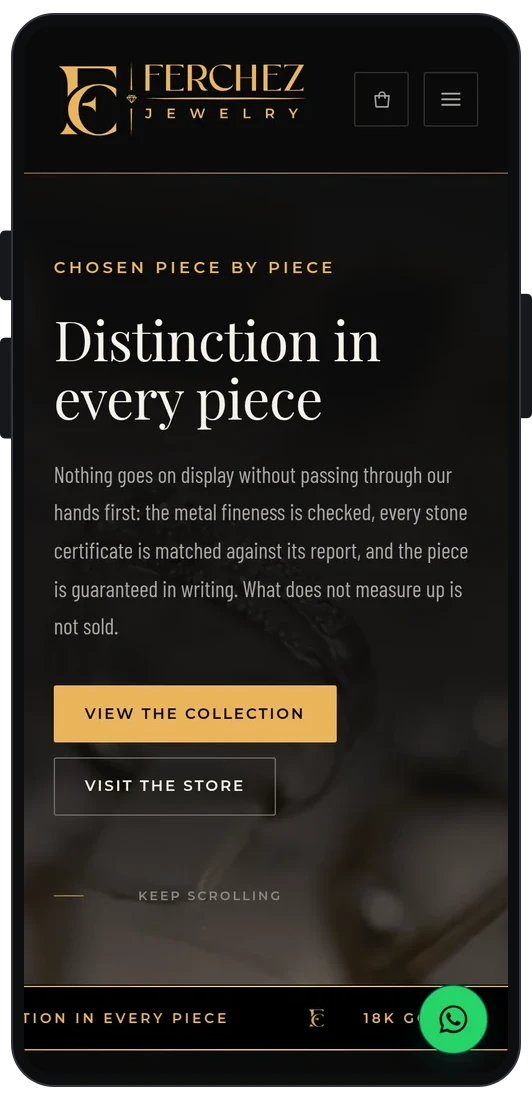
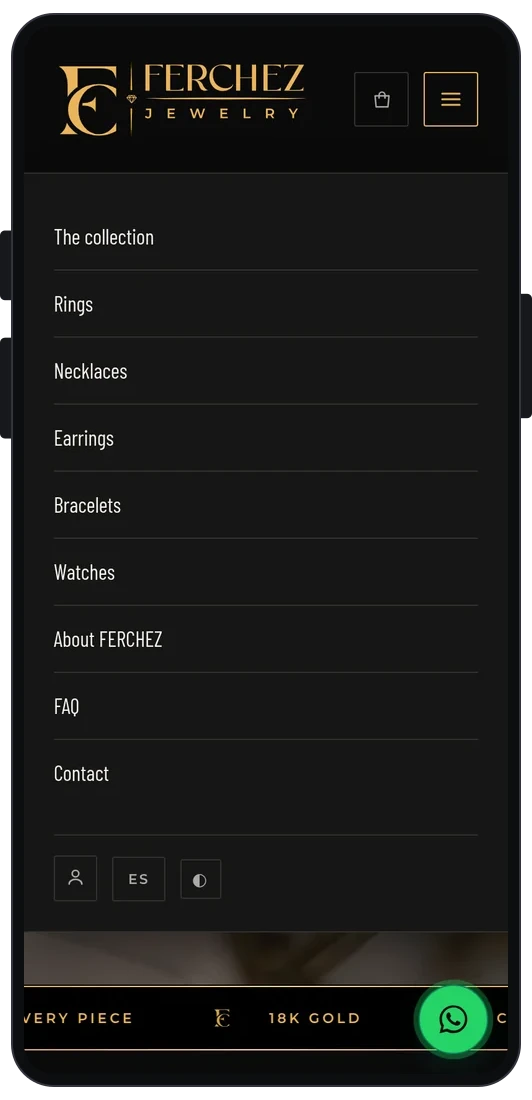
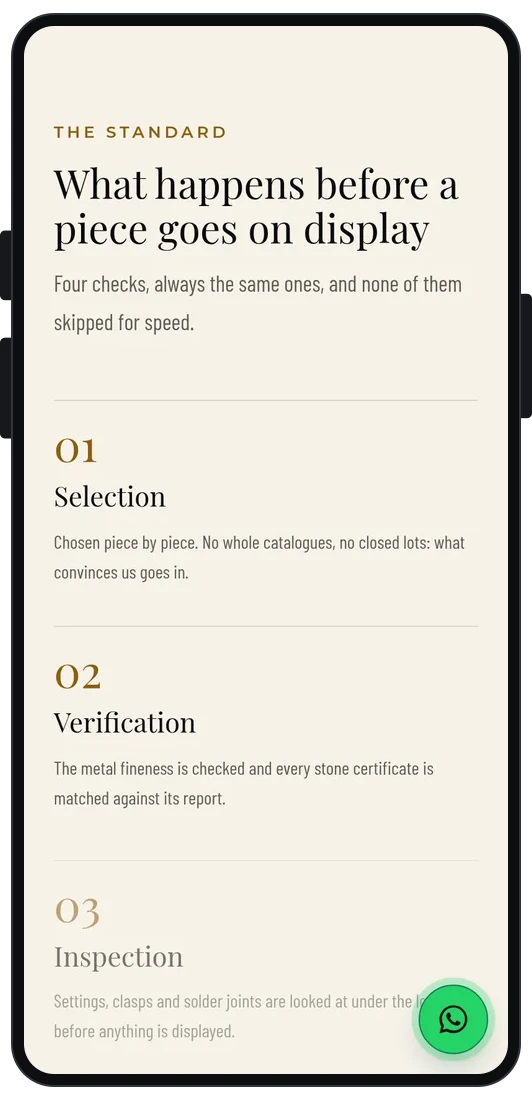
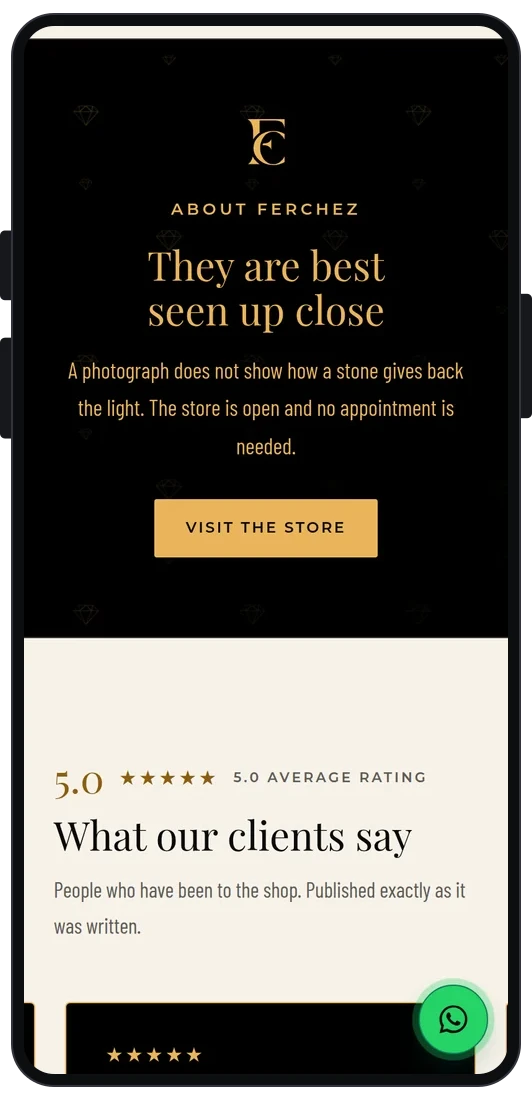
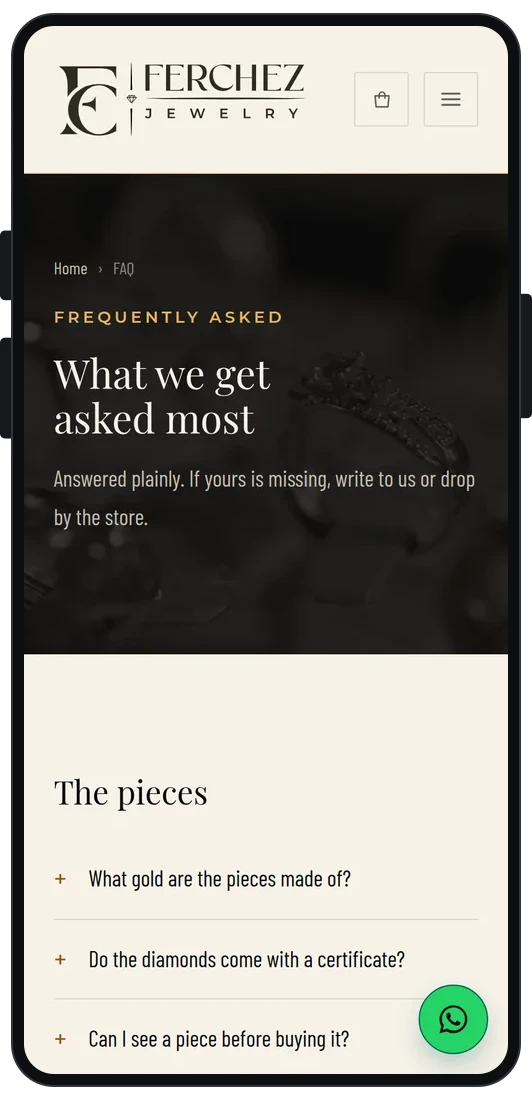
The same site on a phone, in light and dark

Ready to start?
Tell us your idea and we'll show you how to make it a real company.
Let's talk about your project