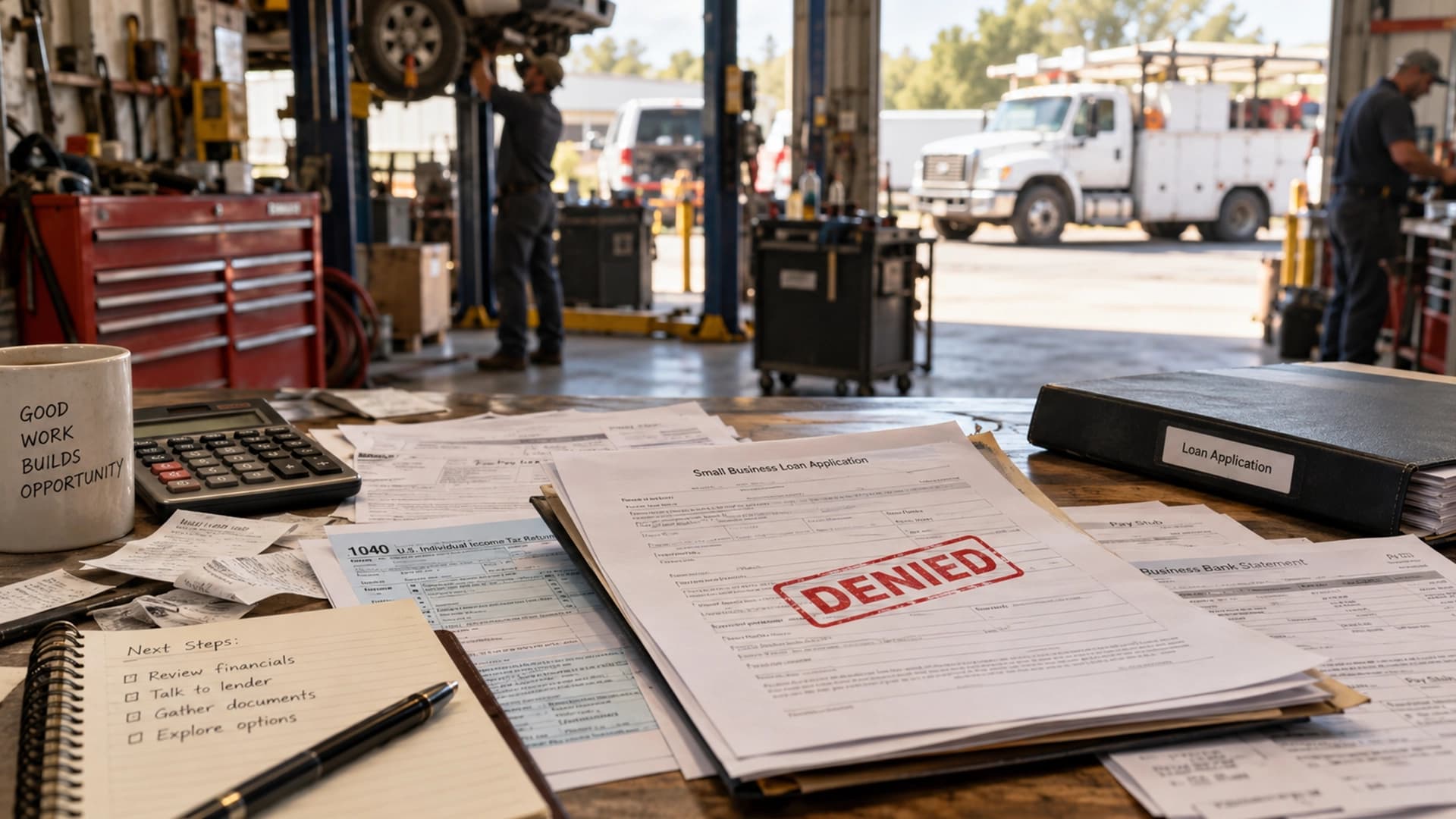
Ramón and Marta are a hardworking couple who have managed to build a good business over seven years. They have steady customers, the business account always has activity, no month in the red, so they decide it's time to buy their own home. They go to the bank confident, bringing bank statements (which look good). They bring tax returns, which are up to date. Ramón is sure he earns more than his brother-in-law, an employee at a small company who bought his house last year with no trouble at all.
Yet the bank turns down their loan. And when they ask why, the answer is that they don't qualify because of their income. Ramón and Marta leave the bank understanding nothing, because the money is there. He sees it every day in his app and it isn't small.
"But I earn well, look at my account"
That sentence sums up the whole misunderstanding. The bank is not saying you don't earn money. It is saying that it can't prove how much you earn, which is a very different thing. And that inability almost never comes from the business. It comes from how the owner has been paying themselves.
How a bank sees you when you're the owner
An employee has an enormous advantage and doesn't know it: someone else certifies their income. Their employer hands them a W-2, gives them pay stubs, and if the bank wants to confirm, it calls the company. The income is verified by a third party with no interest in the loan.
When you are the owner, that third party doesn't exist. You can't certify yourself.
So the bank does something else: it takes what your company declared, takes what you declared, and from there calculates a number. That number is called qualifying income, and it is the only one that matters to them. Not your account balance. Not what you invoice. Not what you feel you earn.
The three reasons it goes wrong
First: you lowered your income on purpose
This is the irony of the whole thing, and the one that hurts most once it's understood. For years you were advised to put everything down as an expense to pay less in taxes. And it worked. Your company pays little tax because it shows little profit. But now the bank takes that declared profit and calculates that you earn little. Because that is literally what your papers say.
The worst part is that a lot of people find this out the day they need the loan, when it's too late to change it.
Second: there is no identifiable income
This is where the disorder we discussed in the article about paying yourself from the company's account hits.
If you took money out with no description for years, there is no figure the bank can point to and call "your income". There is no W-2. There are no distributions recorded as distributions. There is a pile of transfers the bank doesn't know what they are, and what isn't known to be anything doesn't count.
Third: the numbers don't match each other
The bank cross-checks three things: what the company declared, what you declared, and what the bank statements show.
When personal expenses are paid from the business account, those three don't match. Outflows appear that correspond to nothing in the business, deposits nobody knows the source of, and a company whose activity doesn't look like what it declared.
A file that doesn't add up is a file that gets rejected, even if everything behind it is honest. The bank isn't looking for culprits. It is looking to be able to explain the loan if someone reviews it later, and with those papers it can't. And there is a detail that surprises many: the bank also looks at whether your company can withstand you taking money out. If withdrawing what you withdraw would leave the business without enough to operate, that counts against you.
The cost you are already paying
This doesn't start the day of the loan. It starts long before, and you've been paying it without noticing.
When accounts are mixed, what your accountant does stops being bookkeeping and becomes reconstruction. Someone has to go through transaction by transaction and decide what each one was. You don't remember, so they have to ask you. Every question is a message that takes you days to answer, because you're working.
That costs more. It costs more each year. And it's paid in full by the owner who thought they were saving themselves the work of separating the accounts.
Warning signs
- You couldn't say what your income would be according to your returns
- Your accountant insists every year that you declare more and you resist
- You own a corporation and have never received a W-2 from it
- You pay your home expenses from the business account
- Your company barely shows a profit but you live well
- You plan to ask for a loan and have never reviewed how the bank will see it
- Your bank statements have deposits you couldn't explain
What to do, and how far ahead
Separate the accounts and don't go back.
Decide how you get paid and make it consistent.
Understand what you're declaring.
Accept the trade-off consciously.
Write down every odd deposit.
Ask before, not after.
Ramón, two years later
Ramón and Marta left the bank annoyed and took a few months to think about the subject again. When they did, they started with the boring part: they opened a separate account for themselves, stopped running the household expenses through the business, and set themselves a fixed payment every two weeks. The following return showed more profit. They paid more in taxes and it hurt, but since they had more control of their finances it didn't hurt as much. On the second one they showed even more, and it barely weighed on them because they were prepared for it and because they understood what they were buying with it. When they went back to the bank, they carried the same thing as any employee: an income someone could read without guessing. They were approved for the house.
What Ramón says now, when someone asks, is that he didn't lose the loan for earning little. He lost it for not being able to prove it. And that those two years could have been saved if someone had explained it to him sooner.
In short
Paying less in taxes today has a cost that doesn't appear on the return: it appears the day you need someone to believe how much you earn. And by then it's already written.
If you plan to buy a house, ask for a loan or finance a big project in the coming years, the moment to look at how you're paying yourself is now. After that, all that's left is regret.