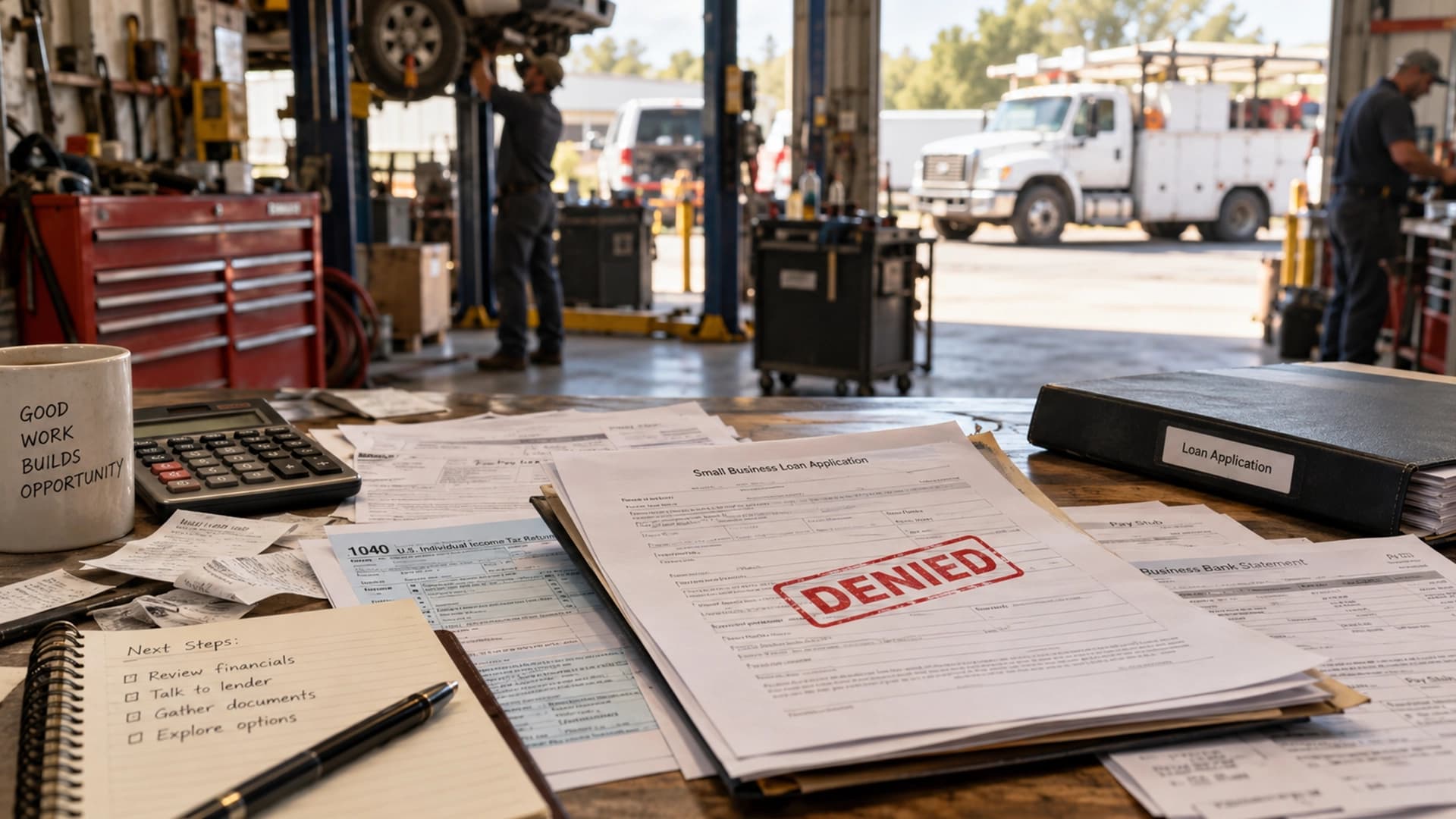
Andrés opened his LLC eight months ago. It's going better than he expected: customers pay, the business account has a balance that looks good, and last month he finally collected enough to leave his other job.
And there he is, looking at the banking app without daring to move anything. He needs the money for his rent. It's his business and it's his account, but he feels that transferring to his personal account is doing something improper.
This is probably the question an owner asks themselves most often in their first year, and almost always with that same look on their face.
What you're doing has a name
When the owner takes money out of their own business this way, it's called an owner's draw. You'll see it written that way in your accounting software and your accountant will call it that. It is not a salary. It is not a company expense. It is not deductible. It is simply you taking a share of what is already yours.
And that is the key to why it works differently from a corporation: in a single-owner LLC with no special election, the IRS doesn't see two people. It sees one. The company doesn't file separately; its income and expenses go on the owner's personal return. If the IRS doesn't see two people, there is no transfer between two people to police. That's why there is flexibility here and not in a corporation, where there really are two distinct people. That has its own article.
The misunderstanding that costs the most
Now comes the part that changes a lot of people's faces.
You don't pay taxes on what you take out. You pay taxes on what the business earned.
Read it again, because almost everyone understands the opposite.
If your business had a profit during the year, you owe taxes on that entire profit, whether you took the money out or left it sitting in the account. The draw is not what gets taxed. The profit is what gets taxed.
Two situations seen all the time come out of this:
Andrés, who left the money in the account believing that way he wouldn't be taxed.
The one who took everything out and didn't set aside for taxes.
So, how much can I take out?
There are limits here, though not the ones you expected. They aren't permissions someone denies you, they are consequences that show up on their own.
You can't take out more than there is.
What is owed to the government isn't yours.
If you have employees, what you withheld from them isn't yours.
The company has to stay standing.
Beyond that, the rest is yours and you can take it out.
"And why can't I go on payroll?"
A very frequent question, and it comes from a good place: the owner wants to do things right.
But in a single-owner LLC with no special election, you can't be your own employee. There aren't two people. Nobody can be an employee of themselves. Putting yourself on payroll in this situation isn't "doing it better". It's creating a W-2 that doesn't apply, withholdings that shouldn't have been made and a tangle to undo later.
If what you want is salary treatment, that exists, but by another route: making the election so that the IRS taxes your LLC as an S Corporation. And then there is a salary, there is payroll, and the reasonable compensation requirement appears. That is another article.
Freedom doesn't remove the record
Here is the mistake that connects most with everything else in this series.
That the draw is flexible doesn't mean it's invisible. Every outflow has to be recorded as what it is: an owner's draw. Not mixed in with business expenses, not with no description, not "we'll see later".
Warning signs
- You take money out with no description and classify it months later
- You believe that if you leave the money in the account you don't pay taxes on it
- You aren't setting anything aside for your tax return
- You use a single account for the business and for your home
- You put yourself on payroll as the sole owner of an LLC with no special election
- You issue a 1099 to yourself
- You couldn't say how much you took out last year
How to do it in an orderly way
It doesn't require a complicated system. It requires consistency.
Two accounts, always.
Set the tax money aside as soon as it comes in.
Set yourself a fixed draw.
Record every draw at the moment.
Look at the profit, not the balance.
Andrés, a year later
What Andrés ended up doing was nothing complicated. He opened a separate personal account, set himself a fixed draw every two weeks, and opened a third account where he puts his share of taxes every time a customer pays him.
That third account is what changed his year. When the return arrived, the money was there. He didn't have to borrow or take from where there wasn't any.
He says that what cost him most wasn't the system, but understanding that he wasn't asking for permission. He was asking how.
In short
What you can't do is confuse that freedom with the absence of consequences. Taxes are calculated on what the business earned, not on what you withdrew. The money from withholdings and taxes was never yours. And every outflow needs to be written down, however easy it was to make.
If you've never sat down to look at how much you took out last year or how much you're going to owe on what the business earned, that is the exercise worth doing before someone else asks you to.